Buying guide
Best Portable Power Stations for Hurricane Preparedness
Four battery power stations for hurricane season, matched to what you need to keep running. Compare capacity, output, and backup features, then size yours.
By the SemperPrep team · Updated 2026-11-19 · Based on manufacturer specifications and editorial analysis
SemperPrep may earn a commission when you buy through links on this site. It costs you nothing extra. As an Amazon Associate I earn from qualifying purchases. How we make money
When a hurricane takes the grid down, the question is not whether you want backup power. It is which unit keeps your essentials running for as long as the outage lasts, and Ready.gov warns that after a hurricane you may not have access to supplies "for days or even weeks." This guide gets you to the right battery power station quickly: four picks up top, a side-by-side comparison, and a sizing step so you buy the capacity you actually need.
Our picks at a glance
- 1
Mid-capacity backup that can grow
EcoFlow DELTA 3 Plus1,024 Wh · 1,800 W rated output
- Stated expansion up to 5 kWh, the most among our picks
- 1,024 Wh alone will not cover a full day that includes a refrigerator
- 2
Higher-capacity backup
Anker SOLIX C2000 Gen 22,048 Wh · 2,400 W rated output
- 2,048 Wh plus solar and alternator recharging
- Anker's product page does not state the warranty length
- 3
Compact backup for small electronics
BLUETTI EB3A268.8 Wh · 600 W rated output
- Light (10.14 lb) and quick to recharge from the wall (stated)
- BLUETTI does not state a UPS or switchover function
- 4
2 kWh backup, lightest of our high-capacity picks
Jackery Explorer 2000 v22,042 Wh · 2,200 W rated output
- 2,042 Wh at 39.5 lb
- Not expandable, and solar input is stated at 400 W max
Compare the picks
The specs that separate these four for hurricane use: stored energy, rated output, weight, whether the unit switches over automatically when the grid drops, whether you can add batteries later, and how fast it can refill from solar.
Scroll sideways to see all 4 products
| Product | 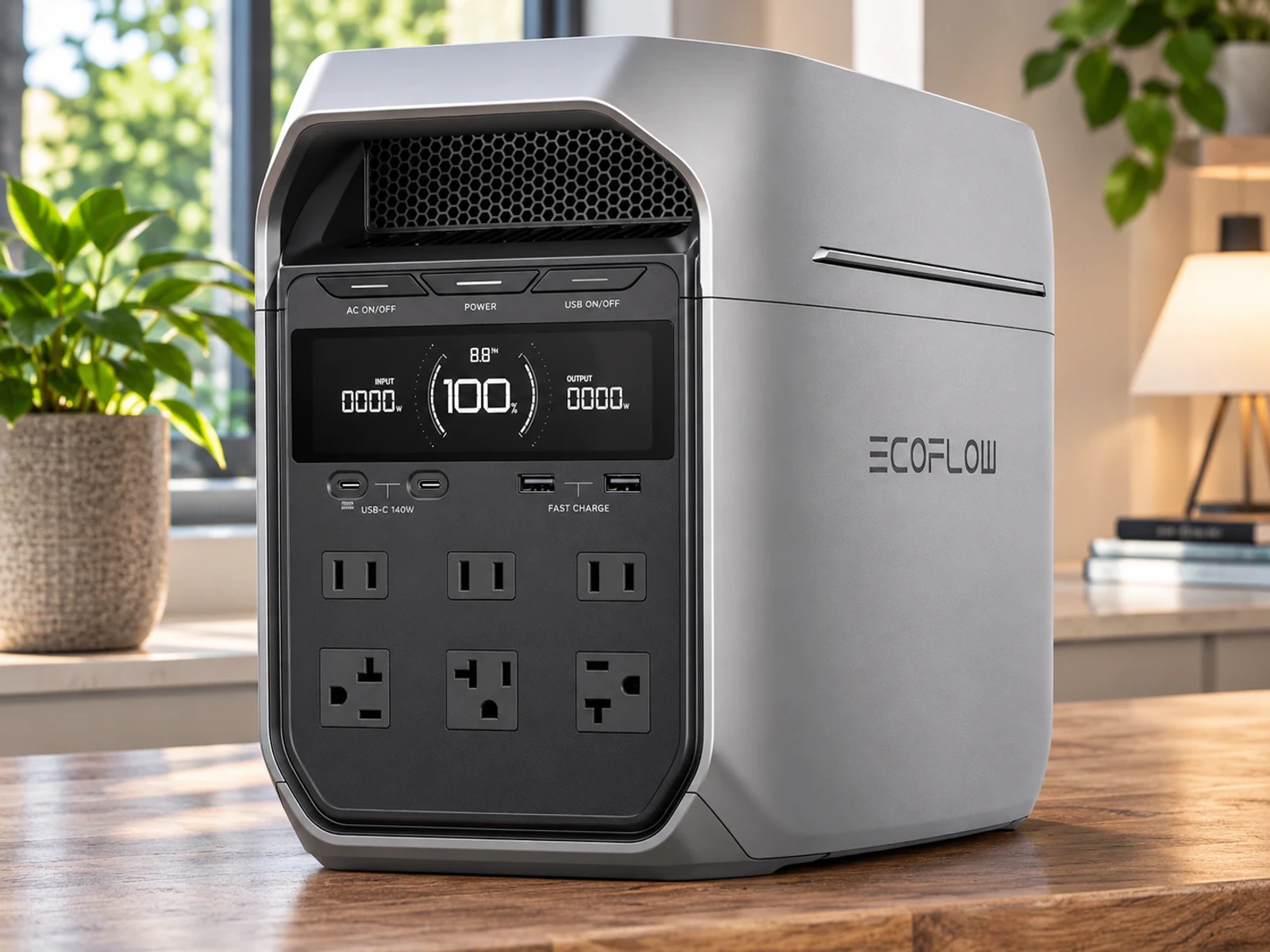 EcoFlow EcoFlow DELTA 3 Plus | 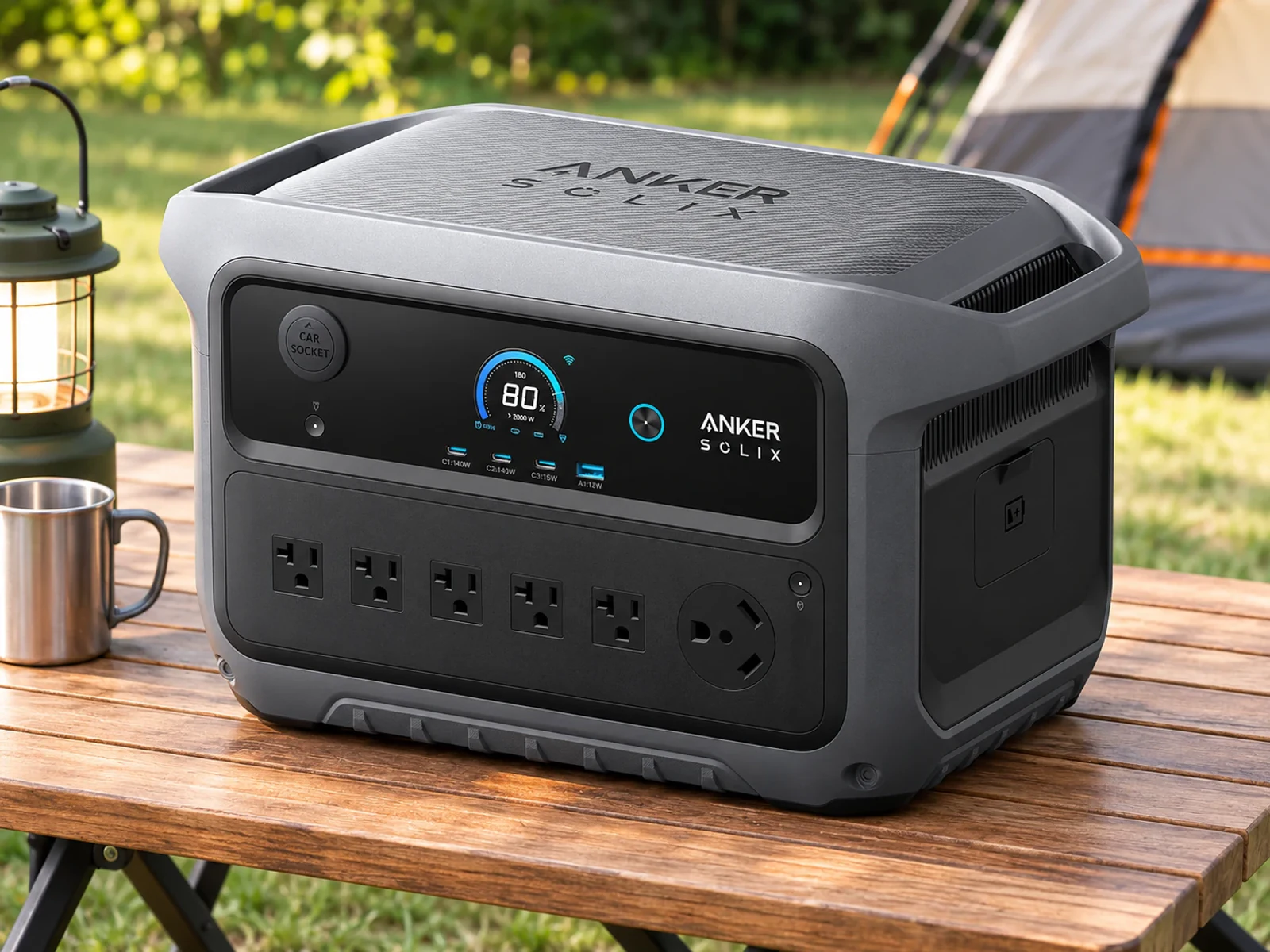 Anker SOLIX Anker SOLIX C2000 Gen 2 | 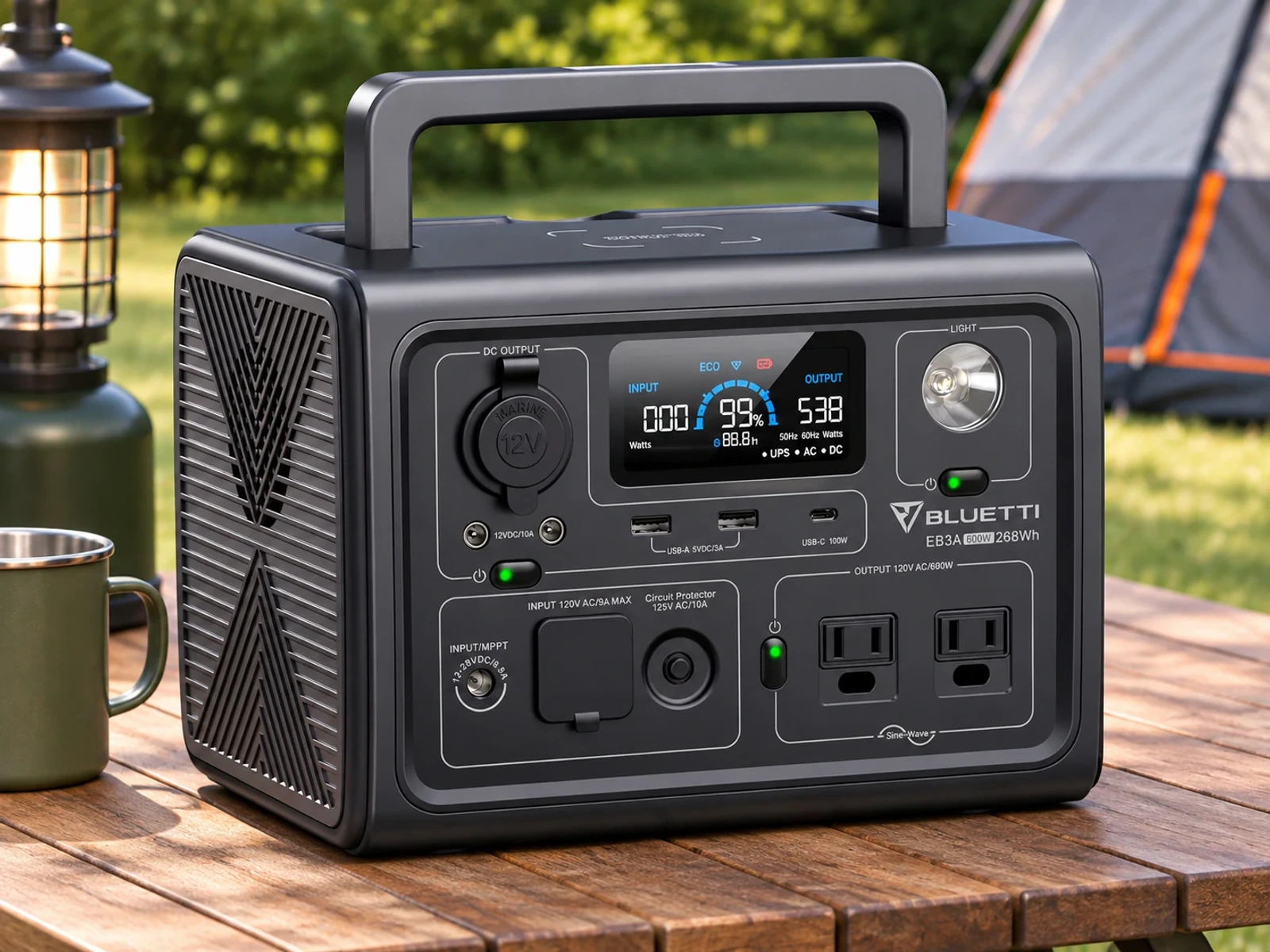 BLUETTI BLUETTI EB3A | 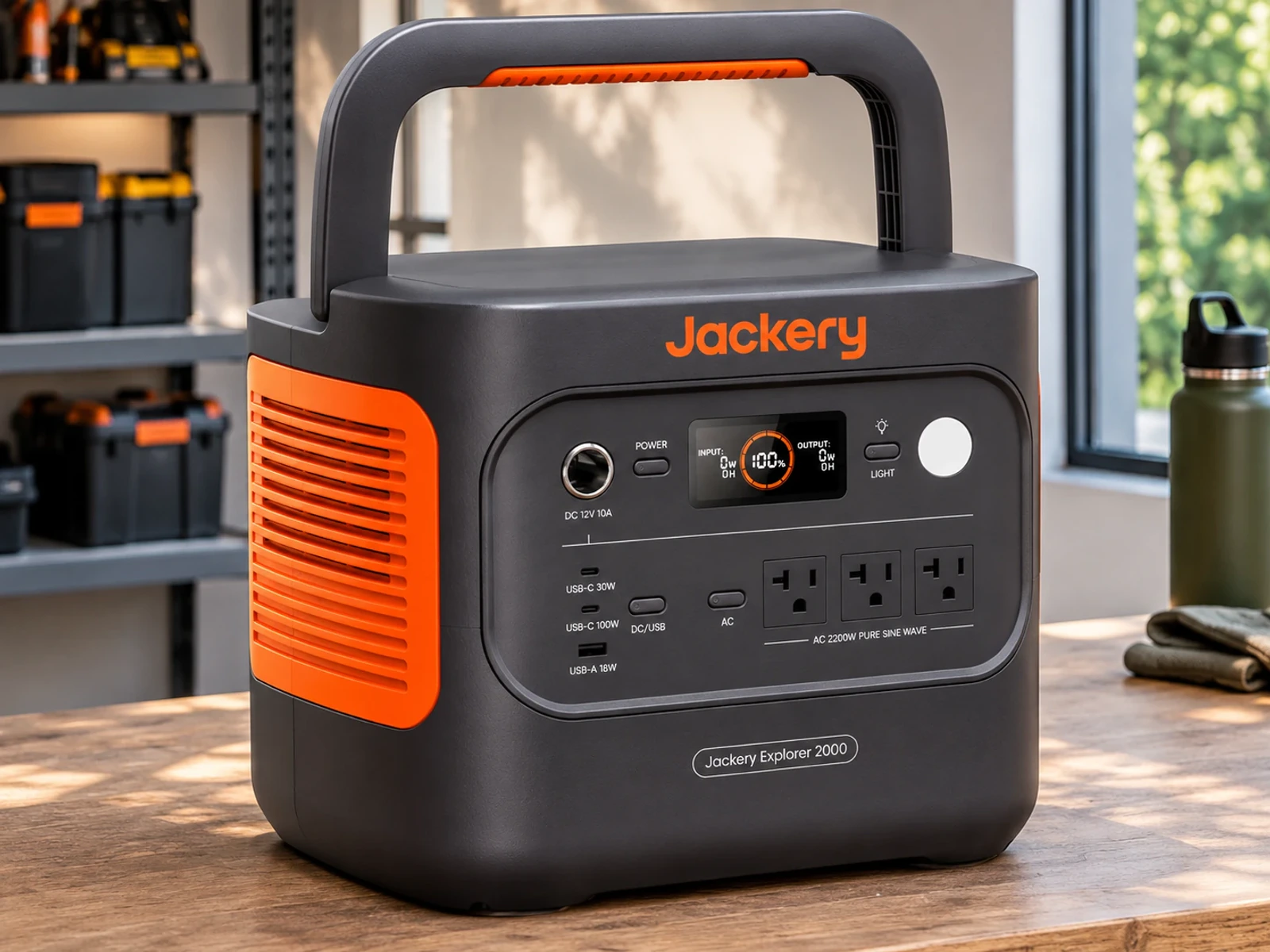 Jackery Jackery Explorer 2000 v2 |
|---|---|---|---|---|
| Battery capacity | 1,024 Wh | 2,048 Wh | 268.8 Wh | 2,042 Wh |
| AC output (rated) | 1,800 W | 2,400 WBest | 600 W | 2,200 W |
| Weight | 27.6 lbMaker’s noteStated as approx. 12.5 kg (27.6 lb). | 41.7 lbMaker’s noteStated as 41.7 lb (18.9 kg). | 10.1 lbBestMaker’s noteStated as 10.14 lb / 4.6 kg. | 39.5 lbMaker’s noteStated as around 39.5 lbs (17.9 kg). |
| UPS / backup switchover | Yes | Yes | Not stated | Yes |
| Switchover time (stated) | 10 msMaker’s noteStated as <10ms. | 10 msMaker’s noteListed as "UPS 10 ms". | Not stated | 20 msMaker’s noteStated as <20ms. |
| Expandable battery | Yes | Yes | Not stated | NoMaker’s noteJackery FAQ: "No, the Explorer 2000 v2 is not expandable." |
| Max capacity with expansion | 5,000 WhMaker’s noteStated as "up to 5kWh" with DELTA 3, DELTA 2, DELTA 2 Max, or DELTA Pro 3 Extra Batteries. | 4,000 WhMaker’s noteStated as "up to 4kWh" with the BP2000 Gen 2 battery (2,048 Wh). | Not stated | Not expandable |
| Max solar input | 1,000 WBestMaker’s noteTwo solar ports, 500W max each (11V to 60V). | 800 WMaker’s notePV / XT-60i input, 11V to 60V, 17A max, 800W. | 200 W | 400 WMaker’s noteTwo DC 8mm ports, stated as "Double to 21A/400W Max". |
| Warranty | 5 yr | Not stated | 2 yrMaker’s noteStated as 24 months. | 3 yrMaker’s noteJackery FAQ: 3 years standard plus 2 years extended, only for purchases from the official Jackery website, Jackery-branded third-party platforms, or authorized dealers. |
Manufacturer-stated specifications. “Best” marks a lead of at least 5%, and only when every product above states the value. Peak ratings, cycle life, and switchover times are not ranked because brands state them differently.
Choose based on your actual power needs
Three numbers decide whether a unit fits, and each one answers a different question.
- Battery capacity (Wh) is how much energy is stored. It decides how long things run. A unit's watt-hours divided by what your devices draw gives a rough runtime, after some energy is lost converting to wall power. Our calculator assumes about 15% loss: a 1,024 Wh unit running 100 W of devices lasts roughly 8.7 hours.
- Rated output (W) is the most power the unit can deliver continuously. It decides what can run at the same time. Add up everything that might run at once; the rated output must be higher.
- Startup load is the brief extra draw when a motor starts: refrigerators, freezers, sump pumps, and air conditioners. Brands state peak ratings differently, and some peak modes only suit heating devices, so check your appliance's startup draw against the maker's surge rating.
Two examples from our calculator show why sizing matters before you buy. Phones, a Wi-Fi router, LED lights, and a CPAP without a humidifier come to about 977 Wh for one day, which a single 1 kWh class unit covers. Add a refrigerator and the same day becomes about 2,295 Wh, beyond any single unit on this list without added batteries or daily recharging. Your own devices will differ, so run your numbers.
Size it before you buy
Three numbers decide which unit fits
1
List what must stay on
Add each device and how many hours a day you need it. Watts × hours gives the energy you need, in watt-hours (Wh).
2
Check what runs at once
Add up the watts of everything running at the same time. The unit's rated (continuous) output in watts (W) must be higher.
3
Flag startup loads
Fridges, freezers, pumps, and AC draw extra power for a moment when they start. Check that against the maker's surge rating.
The power calculator does this math, adds about 15% inverter loss, and lists the units in our catalog whose stated capacity and rated output meet your estimate.
Our recommendations in detail
1. Mid-capacity backup that can grow
EcoFlow DELTA 3 Plus
EditorialIt pairs 1,024 Wh with 1,800 W of rated output, enough to cover the calculator's essentials-plus-CPAP day (977 Wh) with a little margin. EcoFlow states a UPS switchover under 10 ms and expansion up to 5 kWh, so you can start here and add capacity later.
- Battery capacity
- 1,024 Wh
- AC output (rated)
- 1,800 W
- Weight
- 27.6 lb
- +1,800W across six AC outlets
- +1,000W of solar input over two ports
- +Expandable to 5 kWh (stated)
- −27.6 lb, so a two-hand carry
- −Peak and X-Boost ratings are separate figures; check which applies to your device
- Who should consider it
- Most households that want overnight essentials, a CPAP, Wi-Fi, and phones covered, with room to add batteries later.
- When another option fits better
- If you already know you need a refrigerator through a full day without recharging, start with a 2 kWh unit such as the SOLIX C2000 Gen 2.
2. Higher-capacity backup
Anker SOLIX C2000 Gen 2
EditorialTwice the stored energy of the mid-capacity class at 2,048 Wh, with 2,400 W rated output, a stated 10 ms UPS switchover, and two ways to refill during an outage: up to 800 W of solar input and an 800 W alternator charging option. Anker states expansion up to 4 kWh.
- Battery capacity
- 2,048 Wh
- AC output (rated)
- 2,400 W
- Weight
- 41.7 lb
- +UPS switchover stated at 10 ms, versus under 20 ms for the Explorer 2000 v2
- +800W solar and 800W alternator charging
- +Expandable to 4 kWh
- −Warranty length not stated on the product page
- −41.7 lb
- −Number of standard AC outlets not stated
- Who should consider it
- Households planning for a refrigerator plus essentials, or for more than one night between recharges.
- When another option fits better
- If you want the lightest 2 kWh option and will not expand, the Explorer 2000 v2 is 2.2 lb lighter (39.5 lb vs 41.7 lb).
3. Compact backup for small electronics
BLUETTI EB3A
EditorialAt 268.8 Wh and 10.14 lb, it is the small, grab-and-go option among our picks: phones, a router, lights, and a laptop. With 600 W of rated AC output, the BLUETTI EB3A delivers twice the 300 W output of the Anker SOLIX C300. BLUETTI states 0 to 80% in 40 minutes on its Turbo wall charging.
- Battery capacity
- 268.8 Wh
- AC output (rated)
- 600 W
- Weight
- 10.1 lb
- +600W rated output, twice the 300W of the Anker SOLIX C300
- +Turbo wall charging, 0 to 80% in 40 minutes (stated)
- +Wireless charging pad
- −2-year warranty, shorter than most rivals here
- −UPS function not stated
- −Smallest capacity in the catalog at 268.8 Wh
- Who should consider it
- Renters, evacuation bags, or a second unit for small electronics alongside a larger station.
- When another option fits better
- For a CPAP that must keep running the moment power drops, choose a unit with a stated UPS switchover, such as the DELTA 3 Plus.
4. 2 kWh backup, lightest of our high-capacity picks
Jackery Explorer 2000 v2
EditorialIt delivers 2,042 Wh and 2,200 W of rated output at a stated 39.5 lb, with UPS switching stated as under 20 ms. Jackery's FAQ says it is not expandable, so what you buy is what you get.
- Battery capacity
- 2,042 Wh
- AC output (rated)
- 2,200 W
- Weight
- 39.5 lb
- +2,042 Wh at 39.5 lb, the lightest 2 kWh unit here
- +2,200W rated output
- +UPS switching stated under 20 ms
- −Not expandable (per Jackery FAQ)
- −Solar input stated as 400W max
- −Three AC outlets
- Who should consider it
- Households that want about 2 kWh in one simple unit and do not plan to add batteries.
- When another option fits better
- If you want faster solar recharging or the option to expand, the SOLIX C2000 Gen 2 states 800 W solar input and expansion to 4 kWh.
Hurricane-specific buying factors
How long the outage might last
Plan for more than one night. After a hurricane, Ready.gov notes supplies may be out of reach for days or even weeks, so a unit that can refill matters as much as its starting capacity. If your calculation runs past one unit's capacity, you have three levers: add expansion batteries, recharge from solar during the day, or cut what runs overnight.
Refrigerators and freezers
A refrigerator is the load that most often pushes a household into a larger unit, because it runs around the clock and needs extra power at startup. Ready.gov says a refrigerator keeps food cold for about four hours, and a full freezer for about 48 hours, if you keep them closed. That gives you time to decide what to power and when, rather than running everything at once.
Medical devices
If someone relies on a CPAP or another electrically powered medical device, Ready.gov advises making an outage plan with your medical provider. For a CPAP, look for a unit with a stated UPS or backup switchover, which keeps the device running the moment grid power drops. Three of our four picks state one; the compact EB3A does not.
Recharging, and the limits of solar
Every pick here can recharge from solar, but the maximum solar input is a ceiling, not a promise. Manufacturers state solar charge times for ideal conditions; BLUETTI's EB3A spec page, for example, qualifies its solar time with "prime sunshine, ideal orientation and low temperature." Storm clouds, shade, and panel angle all cut real-world input. Higher stated solar input (the DELTA 3 Plus states 1,000 W across two ports, the SOLIX C2000 Gen 2 states 800 W) gives you more headroom when the sun does come out. You can compare every unit by solar input.
Expandable systems
Two of our picks state expansion: the DELTA 3 Plus up to 5 kWh and the SOLIX C2000 Gen 2 up to 4 kWh, with extra batteries sold separately. If your budget fits a mid-size unit now but your calculation points higher, an expandable unit lets you add capacity later instead of replacing the whole system.
Safe operation
Carbon monoxide is the hazard that matters most after a storm: the National Weather Service calls CO poisoning "one of the leading causes of death after storms in areas dealing with power outages." The CDC explains that CO comes from burning fuel, and says to run generators outdoors more than 20 feet from windows, doors, and vents. Battery power stations do not burn fuel, so they do not produce CO, which is a key reason people choose them for indoor backup. That is not a blanket safety rating: follow your unit's manual for placement, ventilation, and temperature limits. Whatever you run, the CDC recommends battery-operated or battery back-up CO detectors near every sleeping area.
The Atlantic hurricane season runs June 1 to November 30, so the calmest time to buy and test your setup is before it starts. For the rest of your storm kit, see our guide to water purification methods for emergencies.
How we chose
We compared manufacturer-published specifications for every portable power station in our catalog with an owner-approved Amazon listing, then matched units to the jobs hurricane households actually face: overnight essentials, a refrigerator, medical devices, and multi-day outages. The awards are our editorial judgment. We have not tested these units ourselves, and every spec links back to the manufacturer's page.
The short answer
- Most households: start with the EcoFlow DELTA 3 Plus. It covers an essentials-and-CPAP day, states a fast UPS switchover, and can grow to 5 kWh.
- Refrigerator plus essentials, or longer outages: the Anker SOLIX C2000 Gen 2, with 2,048 Wh and solar plus alternator recharging.
- Small electronics or an evacuation bag: the BLUETTI EB3A.
- About 2 kWh in one simple unit: the Jackery Explorer 2000 v2.
Not sure which power station fits your needs? Use our calculator to estimate your backup power requirements.
Your next step
Mid-capacity backup that can grow
EcoFlow DELTA 3 PlusHigher-capacity backup
Anker SOLIX C2000 Gen 2Compact backup for small electronics
BLUETTI EB3A2 kWh backup, lightest of our high-capacity picks
Jackery Explorer 2000 v2
SemperPrep may earn a commission when you buy through links on this site. It costs you nothing extra. As an Amazon Associate I earn from qualifying purchases. How we make money